With all the hype and proliferation of Artificial Intelligence (including in its use by musicians and “content creators” who use Suno), I’d like you to imagine a hypothetical scenario:
Imagine we are able to take the technology powering Suno and throw it in a time machine back to 1991. The dataset in the LLMs can only use existing information prior to 1991. If you prompted Suno to “create the biggest alternative rock band of the entire 1990s, who would be both a huge tour draw and sell tens of millions of records” it would never create a song or band that sounded like Dave Matthews Band.
Taking a prompt like that in 1991 and Suno would never create something like this:
- Start with a drummer who plays like he is in an early 1970s jazz fusion band, playing fluidly in tricky odd time signatures, highly synopated drum fills and blazing fast double-bass.
- Add a bass player who completely locks in with that drummer, but never plays identical figures with him. Playing off of the drummer, but exactly not with the drummer. Make sure he has chops like Stanley Clarke too.
- Sprinkle in a tenor saxophone player who is equally indebted to James Brown style R&B, P-Funk grooves and honking free jazz.
- Add a violin player who mixes bluegrass style picking with jazz rock fusion influences from Jean-Luc Ponty to the band Kansas.
- Top it all off with a completely nerdy front man who plays acoustic guitar and yelps and yodels as music as he melodically sings.
- Have everyone play super catchy songs that also allow the entire band to stretch out into lengthy instrumental sections with ease.
This is how unlikely the massive success of Dave Matthews Band was. It also illustrates how a data set, no matter how comprehensive, cannot replicate the ingenuity and imagination of humans.
It also cannot simulate organic connections and happy accidents that come from musicians from a local music scene coming together and trying everything to see what sticks. In fact, violinist Boyd Tinsley was never intended to be a full time member of the band. He was friends with sax player LeRoi Moore was recommended to play on the demo for the song “Tripping Billies”. Everyone in the group connected so well during the session that they agreed he should be part of the band going forward.
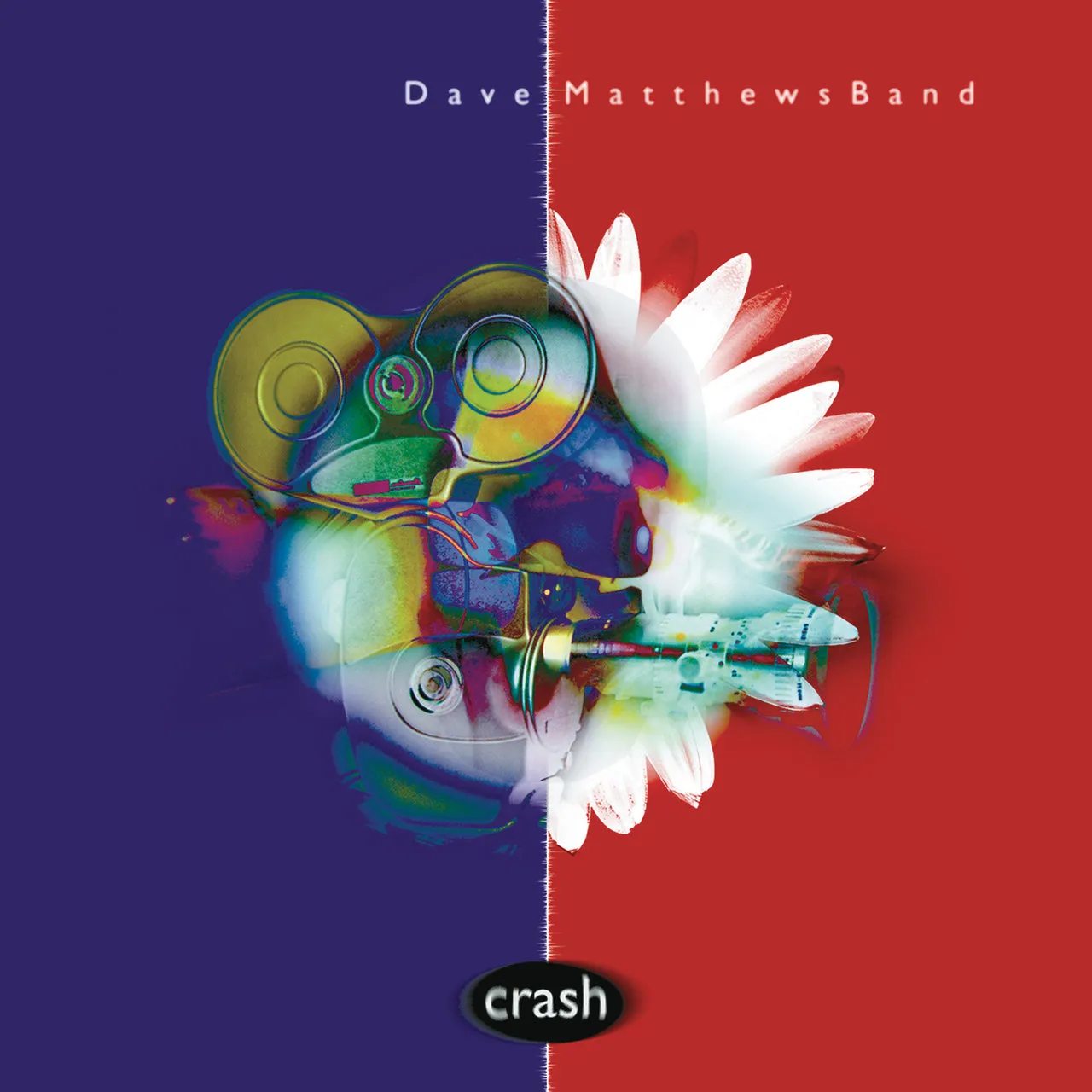
Success came quickly for Dave Matthews Band. Their 1994 album Under the Table and Dreaming ended up selling a respectable 2 million copies, buoyed by the singles “What Would You Say” and “Ants Marching”. But I don’t think they were prepared for the massive success of what was to come just two years later with the release of Crash, which is today’s pick!
When I say that Dave Matthews band was one of the biggest alternative rock bands of the 1990s this is not hyperbole. Crash was one of the 10 best-selling records of 1996, selling over 7 million copies! During the same year Under the Table and Dreaming continued to sell reaching 6 million copies. What albums sold more than Dave Matthews Band in 1996? Only one other alternative rock band was higher: Matchbox Twenty with Yourself or Someone Like You. Others in the top 10 were Spice Girls, Metallica, Fugees, Backstreet Boys and the runaway train at the time that was Celine Dion.
Dave Matthews band sold all these records without compromising their sound or style at all. In fact, nine of the twelve songs are longer than five minutes with lots of stretching out. “Proudest Monkey” surpassed nine minutes and “#41” comes close to seven. The entire album could be considered an epic 70 minutes and only includes 12 songs.
That isn’t to say that Dave Matthews Band completely did away with their pop sensibilities. The two lead singles, “So Much To Say” and “Too Much” were concise pop masterpieces clocking in at around four minutes each. The music videos are fun too! I remember the first time I saw the video for “Too Much” (at that point I was completely unfamiliar with the group) and my reaction was “What the hell is THIS?!”:
They performed “Too Much” on The Late Show with David Letterman and they practically blow the roof off of the tiny TV studio:
I especially love the “So Much To Say” video with the twin Dave Matthews reacting to each other:
“So Much To Say” ended up winning a Grammy in 1997 for “Best Rock Performance by a Duo or Group with Vocal” beating out Aerosmith, Matchbox Twenty, The Wallflowers and Fleetwood Mac. Not too shabby!
Besides the musicians themselves, the secret weapon of Crash is producer Steve Lillywhite. The same Steve Lillywhite that worked on Peter Gabriel’s third solo record and basically invented the gated-snare drum sound that became Phil Collins’ signature sound throughout the 1980s. THAT Steve Lillywhite. Every instrument is recorded clean and crisp, with nice separation between all the parts even when things get very busy sounding. Plus it sounds MASSIVE when played at maximum volume. Its like you’re in the same room with the band.
For example, take a listen to “Say Goodbye”: The extended intro featuring a flute solo(!!) that doesn’t get drowned out by the rest of the band. Not even when Carter Beauford keeps raising the intensity of his tom work until he unleashes a completely bonkers long drum roll around the entirety of his drum kit. That part kills me every time. The rest of the song is pretty great too:
Here’s a live version of “Say Goodbye” that was part of an MTV special, including some great interview footage of members of the band that really showcases how great the sounded as a live unit:
Before I get too far away from praising Carter’s incredible drumming prowess, I want to draw your attention to this awesome footage of him playing for a GoPro commercial. Awesome insanity!
Some of the more jammy songs on Crash were released with music videos with live versions of the songs. “Two Step” and “Tripping Billies” are two examples.
My favorite song on Crash is “Drive In Drive Out”, which is practically a prog rock song. It has it all: tricky time signatures, obtuse lyrics, lengthy solos and even some start / stop syncopation between all the band members near the end.
A year before Crash, Dave Matthews Band played “Drive In Drive Out” at Farm Aid and even in this embryonic state it completely rules!
During the same Farm Aid performance they also played an incredible version of “Tripping Billies”:
Dave Matthews would be a mainstay at Farm Aid ever since, performing regularly at the festival for the next twenty years.
I would be remiss if I didn’t mention the probably the biggest single from the album “Crash Into Me”. Its not my favorite thing on the record. A pleasant ballad that serves as a prologue for Dave Matthews direction on his future solo records. It’s fine, I guess.
Overall Crash is an incredible record that stands the test of time. I cannot believe the album turns thirty years old next week! It still sounds fresh. Dave Matthews Band success since Crash has been consistent and non-stop and while I like songs from all of their records, Crash is the one I can listen to beginning to end and never get tired of.
A masterpiece that A.I. would not have been able to replicate at the time. I’m not even sure A.I. in 2026 could really capture lightning in a bottle quite like Crash did in 1996.